
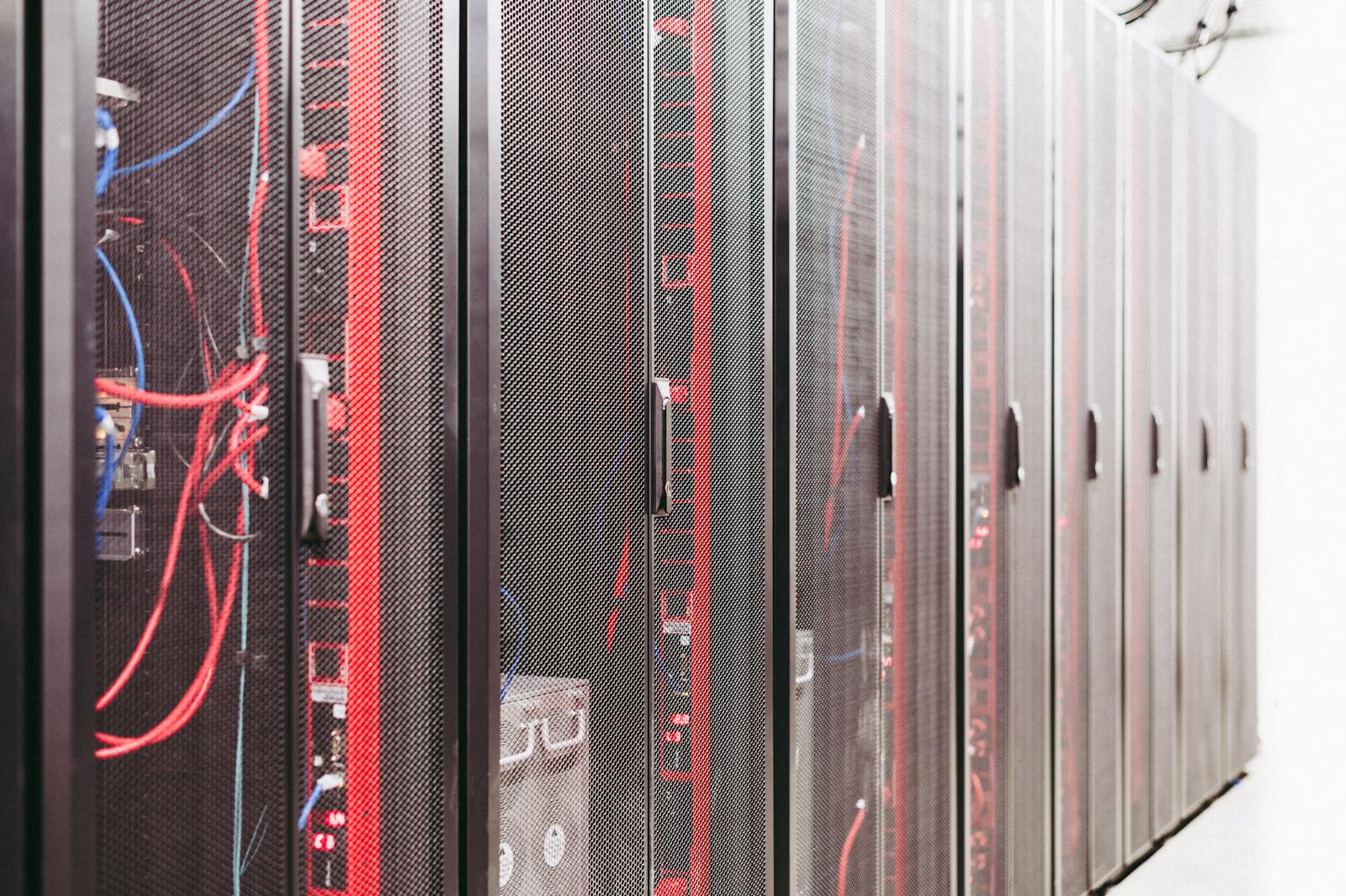
- Inference is becoming the commercial center of AI infrastructure because it powers live products and recurring usage.
- Training and inference have different infrastructure needs: training optimizes for dense clusters, while inference optimizes for latency, uptime and locality.
- Teams should measure AI compute by cost per response, latency, utilization, power constraints and proximity to data, not by GPU count alone.
- A practical AI platform needs routing, scheduling, observability and workload placement as first-class capabilities.
AI infrastructure has spent the last few years being discussed mostly through the lens of model training: larger clusters, larger models, larger GPU purchases. That still matters, but it is no longer the whole story. The infrastructure layer that touches users every day is inference: the process of running trained models inside products, agents, search systems, support tools, analytics workflows and automation pipelines.
For companies building with AI, this changes the buying question. The right question is not simply, “How many GPUs can we access?” It is, “Can this infrastructure deliver reliable answers at the right latency, cost and utilization when real customers are using it?”
Why the market is shifting toward inference
Training is episodic. A team prepares data, runs experiments, trains or fine-tunes a model, evaluates the output and repeats the cycle. Inference is continuous. Every user request, agent step, retrieval workflow, voice command or recommendation can trigger model execution. That makes inference the part of AI infrastructure that directly maps to revenue, customer experience and operating cost.
McKinsey describes this shift clearly: AI data centers are splitting into two different workload families. Training needs high-density clusters, specialized interconnects and large-scale power delivery. Inference needs responsiveness, availability, energy efficiency and proximity to applications and data. McKinsey also projects that inference will become more than half of AI compute workloads by 2030.
This matters because infrastructure designed only for training is not automatically good infrastructure for inference. A remote, dense training site can be useful for batch jobs, but a customer-facing AI product often needs lower round-trip time, better routing and predictable throughput during demand spikes.
Inference turns latency into a business metric
Latency is not just a technical number. It shapes whether users trust an AI product. A support assistant that answers in one second feels different from one that answers in eight. A voice workflow becomes awkward if transcription, routing and generation are not coordinated. An agentic workflow can become expensive if every step waits on overloaded compute or distant storage.
For inference-heavy systems, teams need to track more than average response time. They should understand first-token latency, tail latency, queue time, model load time, memory pressure, cache hit rate, retrieval latency and network distance between the model, application and data. A system can have powerful GPUs and still feel slow if scheduling, routing or data access are poorly designed.
GPU utilization is not the same as useful capacity
High GPU utilization can be good when it means hardware is doing productive work. It can also be a warning sign if workloads are queued, memory is fragmented, smaller services are competing with larger model workers, or the system lacks clear placement rules. Useful capacity is the capacity that can serve the right workload at the right quality of service.
That is why mature AI infrastructure needs workload-aware scheduling. A voice module, embedding service, reranker and large language model worker should not all be treated as identical GPU consumers. Some services need short bursts. Others hold large memory allocations. Some tolerate delay; others sit directly in the user interaction path. The platform has to understand those differences.
Power and locality are becoming strategic constraints
Deloitte’s 2025 AI infrastructure research highlights a major constraint behind the scenes: power and grid capacity. Data center growth is increasingly shaped by access to reliable electricity, interconnection timelines, cooling requirements and regional capacity limits. This means AI compute cannot be planned as if hardware were the only scarce resource.
Locality is becoming just as important. Inference workloads often perform best when they are close to users, applications, storage and private data sources. Moving every request across regions can add latency, cost and governance complexity. For companies operating sensitive data, locality can also simplify privacy, compliance and operational control.
What teams should evaluate before choosing AI compute
A practical AI compute decision should include at least five dimensions.
- Latency profile: how quickly the system starts responding, how stable tail latency is and how routing behaves under load.
- Cost per response: the real operating cost of a completed answer, including retries, retrieval, context expansion, memory overhead and idle capacity.
- Utilization quality: whether GPU time is serving useful workloads or being lost to poor scheduling, oversized models, fragmented memory or queue contention.
- Data locality: whether models, applications and knowledge sources can be placed close enough to reduce delay and unnecessary data movement.
- Operational control: whether the team can observe, route, scale and isolate workloads without rebuilding the system each time requirements change.
The Chainzano perspective
AI compute should be treated as operating infrastructure, not as a one-time GPU rental. The teams that benefit most from AI will be the ones that can connect compute, data, identity, privacy and product workflows into one reliable operating layer.
That means building for the full lifecycle: placing models where they make sense, routing requests intelligently, sharing accelerators without breaking quality of service, measuring latency across the whole interaction path and keeping data close to the workloads that need it.
In this model, infrastructure becomes a product advantage. It gives teams a way to move from prototypes to dependable AI systems that can serve real users, real data and real business processes.