- AI compute capacity depends on power and cooling as much as it depends on GPU supply.
- Grid interconnection and permitting timelines can slow infrastructure deployment even when hardware is available.
- Training and inference create different placement requirements because inference is more sensitive to latency, locality and service quality.
- Businesses should evaluate compute providers by operational reliability, energy constraints, scheduling and cost per useful response.
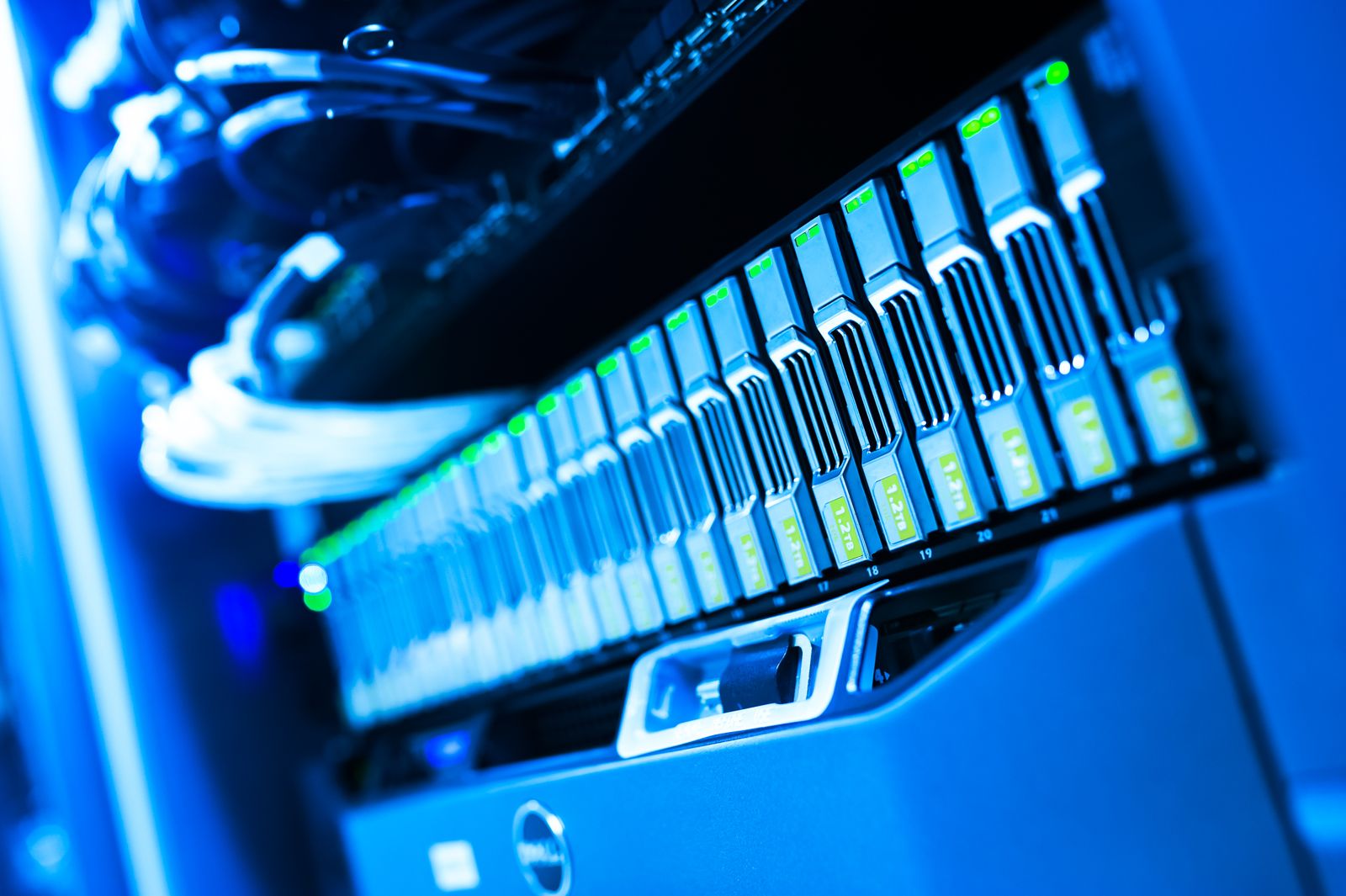
AI infrastructure is often discussed as if the main constraint were GPU availability. GPUs are important, but they are only one part of the system. Modern AI compute also depends on power delivery, cooling, grid interconnection, data center design, regional placement, scheduling and operational discipline.
This is why the AI infrastructure conversation is shifting from chip procurement to physical and operational capacity. A company may have access to accelerators and still struggle if the facility cannot deliver enough power, remove enough heat, connect to the grid quickly enough or place workloads close enough to users and data.
Why GPU supply is not the only constraint
AI workloads have changed data center requirements. Large model training clusters need high-density power, specialized networking and advanced cooling. Inference systems need reliable throughput, low latency, efficient routing and the ability to serve demand continuously. Both workloads need GPUs, but GPUs are not useful in isolation.
McKinsey describes AI data centers as tightly integrated power-and-thermal systems. That framing matters. The compute layer, electrical layer, cooling layer, networking layer and operations layer all shape useful capacity. If one layer is weak, the entire system becomes constrained.
Power interconnection and grid capacity
Power is becoming a strategic AI infrastructure issue. The IEA’s Electricity 2026 work highlights rising electricity demand from AI, data centers and broader electrification. Its grid analysis also points to a structural problem: lack of grid capacity is emerging as a critical bottleneck in many regions, while planning and completing grid infrastructure can take much longer than building new demand-side assets such as data centers.
This creates a practical risk for AI projects. A facility may be announced, funded or even partially designed before reliable power is available at the required scale. Interconnection queues, local grid constraints, permitting, transformer availability and regional energy policy can all affect timelines. Compute planning has to include these physical realities.
Cooling and high-density AI workloads
High-density AI clusters generate intense heat. Cooling is no longer a background facility concern; it is part of compute architecture. Air cooling may be sufficient for some workloads, but denser systems increasingly require more advanced thermal design, liquid cooling, facility retrofits or purpose-built environments.
Cooling affects cost, reliability and placement. A site with low electricity price but poor thermal strategy can still be operationally weak. A site with strong cooling but limited grid capacity may not scale. A site that can run training clusters may not be the best place for low-latency inference. The right architecture depends on the workload.
Why inference needs different placement than training
Training and inference have different physical footprints. Training can often be concentrated in large clusters where the priority is dense compute and fast internal interconnects. Inference is closer to the product experience. It may need to sit nearer to users, applications, storage, private data sources or regional compliance boundaries.
This difference changes infrastructure planning. Inference requires consistent response time, stable queueing, model availability, memory management and routing. A training-optimized region may be powerful but too distant for a latency-sensitive workflow. A smaller near-metro deployment may serve users better if it reduces round-trip time and keeps data closer to the application.
What businesses should ask before choosing AI compute
Before choosing AI compute capacity, teams should look beyond headline GPU counts.
- Power reliability: does the site have confirmed power capacity, backup strategy and realistic expansion plans?
- Cooling design: can the facility support the density and thermal profile of the target workload?
- Workload fit: is the capacity better suited for training, inference, embedding, voice, retrieval or mixed workloads?
- Latency and locality: how close is compute to users, applications, storage and private data sources?
- Scheduling quality: can workloads share accelerators without breaking service quality?
- Observability: can the team measure queue time, utilization, memory pressure, power behavior and cost per response?
- Continuity: what happens during regional outages, power constraints, maintenance windows or sudden demand spikes?
AI compute is an operating system problem
Reliable AI compute is not just a procurement problem. It is an operating system problem across hardware, facilities, scheduling, data locality, networking and cost control. The winning teams will not only acquire GPUs; they will place workloads intelligently, share resources safely, observe bottlenecks and adapt capacity to the shape of demand.
This is especially important as inference becomes a larger share of AI workload growth. Inference turns compute into a live service. The infrastructure has to respond to users, not just complete batch jobs. That means operational quality becomes part of product quality.
The Chainzano perspective
Chainzano treats compute as physical and operational infrastructure. AI systems need GPUs, but they also need power-aware placement, predictable latency, workload-aware scheduling, private data access and telemetry that explains where delays and costs actually come from.
This connects AI compute with the rest of the infrastructure stack. Decentralized data determines where trusted records live. Privacy networking controls access to internal workflows. Digital identity governs users, services and agents. Tokenized assets may add ownership and settlement operations. Compute is the execution layer, but it only works well when the surrounding infrastructure is designed for reliability.
The practical lesson is straightforward: do not evaluate AI infrastructure only by the size of the cluster. Evaluate whether the system can deliver useful work reliably, at the right latency, with known power and cooling limits, and with enough operational control to keep improving over time.